Each piece in this collection begins as a raw willow rod harvested during winter dormancy.
Over days of soaking, bending, and weaving, it becomes a chair, table, or accent that
carries the irregular beauty of natural material.
Every rod comes from managed groves within a short drive of the workshop, selected
for grain straightness and bark integrity.
Traditional joinery
Joints are lashed with soaked willow bark or rattan, not glued. The method allows
future repair and lets the wood breathe.
Made to order
Production runs at roughly one piece per week. Lead times reflect the material's
pace, not factory urgency.
Browse by category
The workshop produces a focused range of willow furniture and decorative objects. Each
category shares common construction methods but serves a different function in the home.
Seating pieces use thicker rods for structural frames and thinner weavers for comfort.
Tables pair rigid undercarriages with flexible tops that settle slightly under weight.
Storage items rely on tight weave density to prevent sagging over time. Outdoor
furniture receives no finish, allowing the willow to grey naturally in sun and rain.
Decorative accents explore smaller forms and finer twig detail, often using species
chosen for bark colour rather than strength.
Chairs and benches built with steam-bent frames and hand-woven seats. Each
supports full adult weight through interlaced rod construction rather than
bulk.
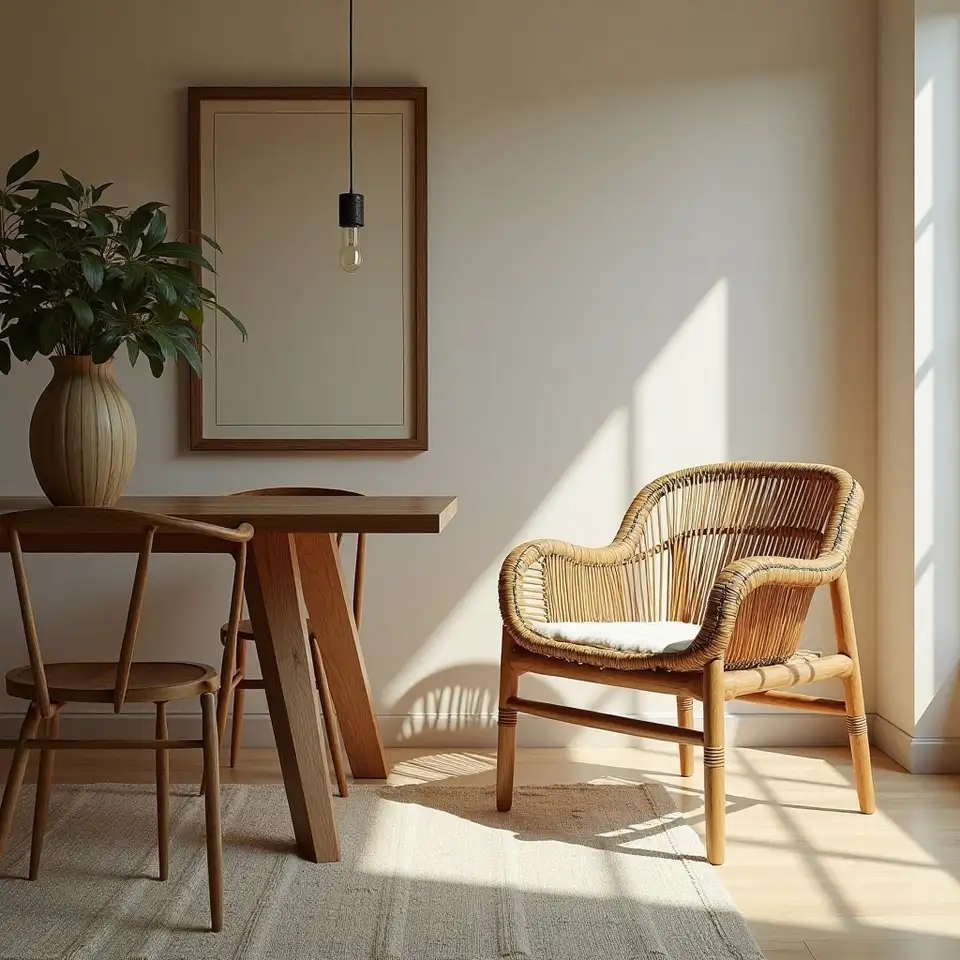
A dining-height chair with a curved crest rail steam-bent from a single
thick rod. The seat uses a seven-strand herringbone weave that tightens
as weight settles.
Round Side Table
A low table with a circular woven top lashed to three splayed legs. The
top flexes slightly under load, a characteristic of green-wood
construction.
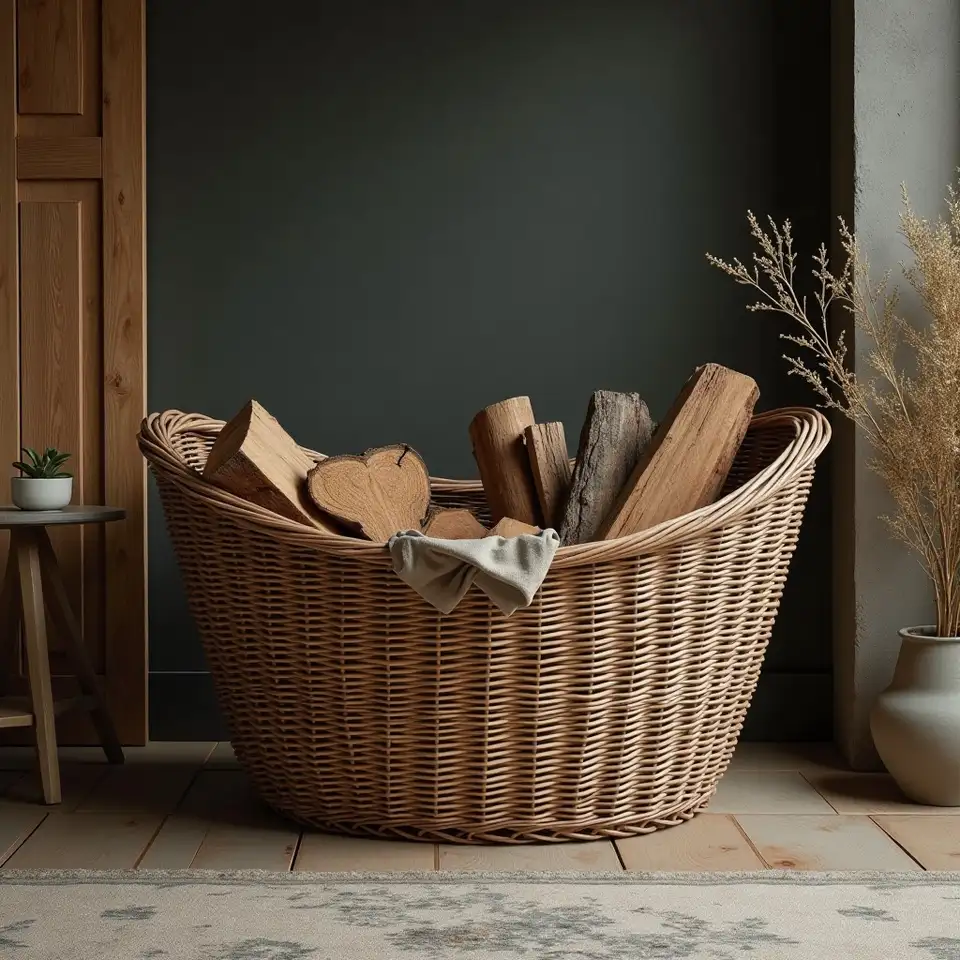
Deep Log Basket
A tall storage basket with a reinforced rim and double-woven base. Built
to hold several days of firewood without sagging or spreading at the
mouth.
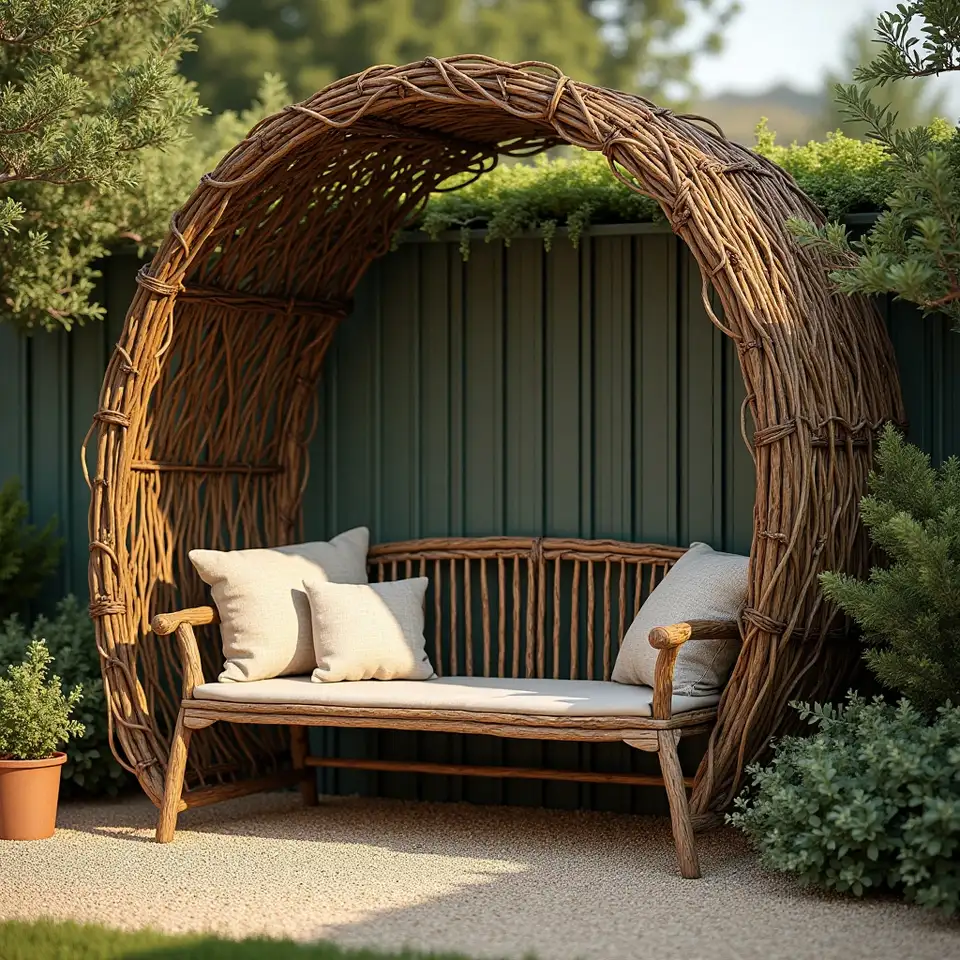
Garden Bench
A two-seat outdoor bench with a high back and wide armrests. Left
unfinished to weather naturally; the frame uses through-tenon lashing
visible from all sides.
Twig Wall Panel
A decorative screen made from fine willow twigs woven in a random
pattern that follows natural curvature. Used as a room divider or
headboard accent.
Oval Serving Tray
A shallow tray with a woven base and raised rim, finished with tightly
wrapped willow bark edging. Light enough to carry one-handed when
loaded.
What sets this collection apart
The workshop does not compete on speed or volume. Its value lies in construction choices
that are difficult to replicate at scale and expensive to reverse once abandoned.
Harvest-to-order sourcing
Willow is cut in winter, stored in the dark, and soaked before use. The craftsperson
knows which farm each rod came from and selects accordingly.
Visible joinery
Lashed joints are left exposed, not hidden beneath upholstery or glue. The
construction method is readable to anyone who examines the piece.
Repairable by design
If a strand breaks after years of use, it can be cut free and replaced without
disassembling the whole frame. The design assumes wear.
No synthetic finishes
Pieces receive oil or nothing at all. The willow ages naturally, darkening in
high-touch areas and greying where exposed to weather.
Sized to real spaces
Dimensions are adjusted for standard Australian doorways, ceiling heights, and room
proportions. Nothing is built too large to move.
Common questions
About ordering and care
Most questions fall into a few predictable categories: how long production takes,
whether pieces suit outdoor use, how to maintain them, and what customization is
possible.
A single chair typically requires forty hours of hands-on work spread across
two to three weeks, including soaking and drying periods. Larger pieces such
as benches or tables need four to six weeks. Lead times are quoted at the
time of order and depend on the existing queue.
Yes, within reason. The craftsperson adjusts dimensions to fit specific
spaces and can modify weave patterns or back heights. Structural methods
remain consistent because they are tied to material behaviour, not style
preference.
Yes, if left unfinished. Unsealed willow weathers to a silver-grey patina
and withstands rain and sun for many years. Pieces kept indoors should avoid
prolonged direct sunlight to prevent excessive drying and brittleness.
Dust with a soft brush or vacuum using a brush attachment. For outdoor
pieces, an occasional rinse with plain water removes surface dirt. Avoid
oils, varnishes, or pressure washing, which trap moisture or damage bark.
The workshop uses several species chosen for bark colour, rod straightness,
and flexibility. Most come from managed coppice groves within fifty
kilometres of the studio. The exact variety depends on availability and the
structural demands of the piece.
Still have questions?
If your question is not covered above, the craftsperson responds directly to
enquiries about sizing, delivery, and care instructions.
This website uses cookies to support core functions, analyse traffic, and improve your browsing
experience. You may accept all cookies, reject non-essential ones, or read more about how data
is handled.
Essential functions
Necessary for the website to operate correctly, including navigation, forms, and
security features.
Usage insights
Helps the workshop understand which content is useful and where technical issues may
exist.
Preference memory
Remembers choices you make, such as form inputs or display settings, across visits.