Statvaenloun
Handwoven willow furniture
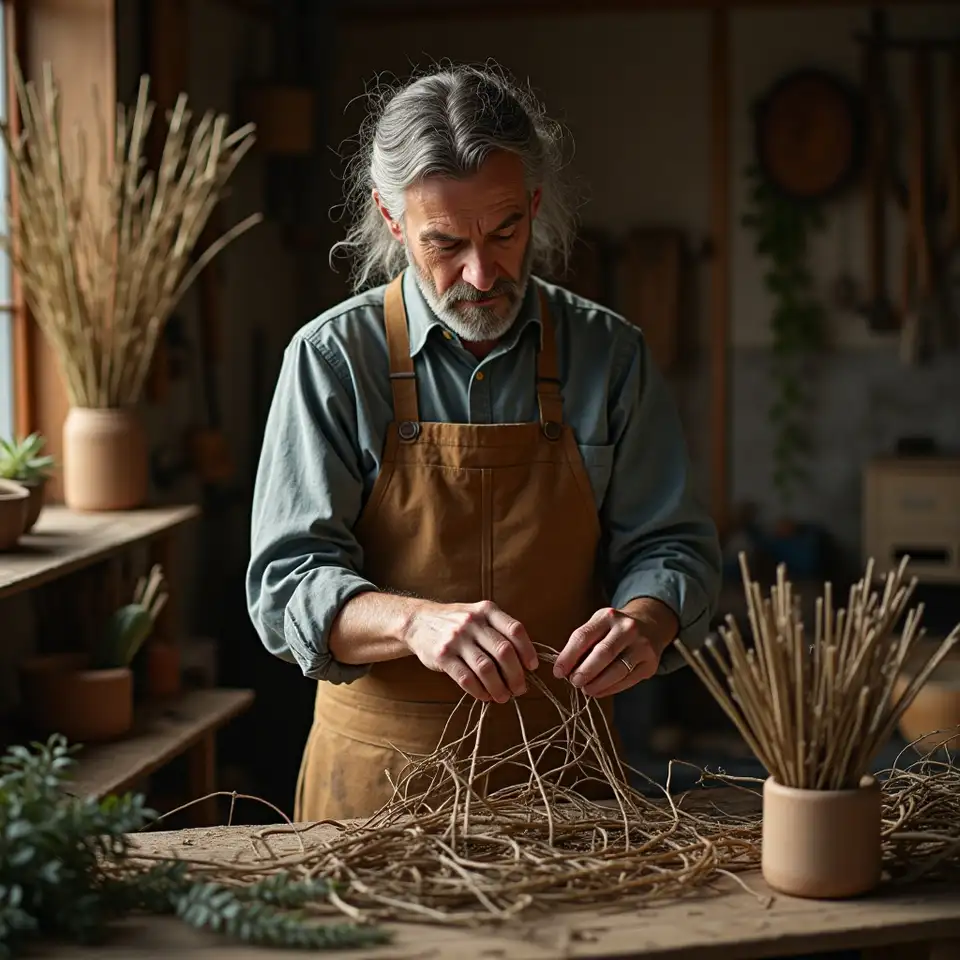
Prepare
Rods are cut during dormancy when sap is low and bark adheres tightly to the wood. The craftsperson selects each rod by hand, grading for straightness, diameter, and flexibility before bundling for storage.
Dried rods are soaked in water for several days to restore pliability. Thicker structural pieces receive additional steaming to allow tight bends without splitting the grain or loosening the bark.
Shape
Excess rod ends are trimmed flush, and the piece is left to dry slowly in controlled conditions. Rapid drying causes cracks; patience here determines whether the furniture survives its first season of use.
Some pieces receive a thin coat of food-safe oil to slow moisture exchange. Others are left unfinished to weather naturally. The choice depends on intended use and the customer's preference for patina versus protection.
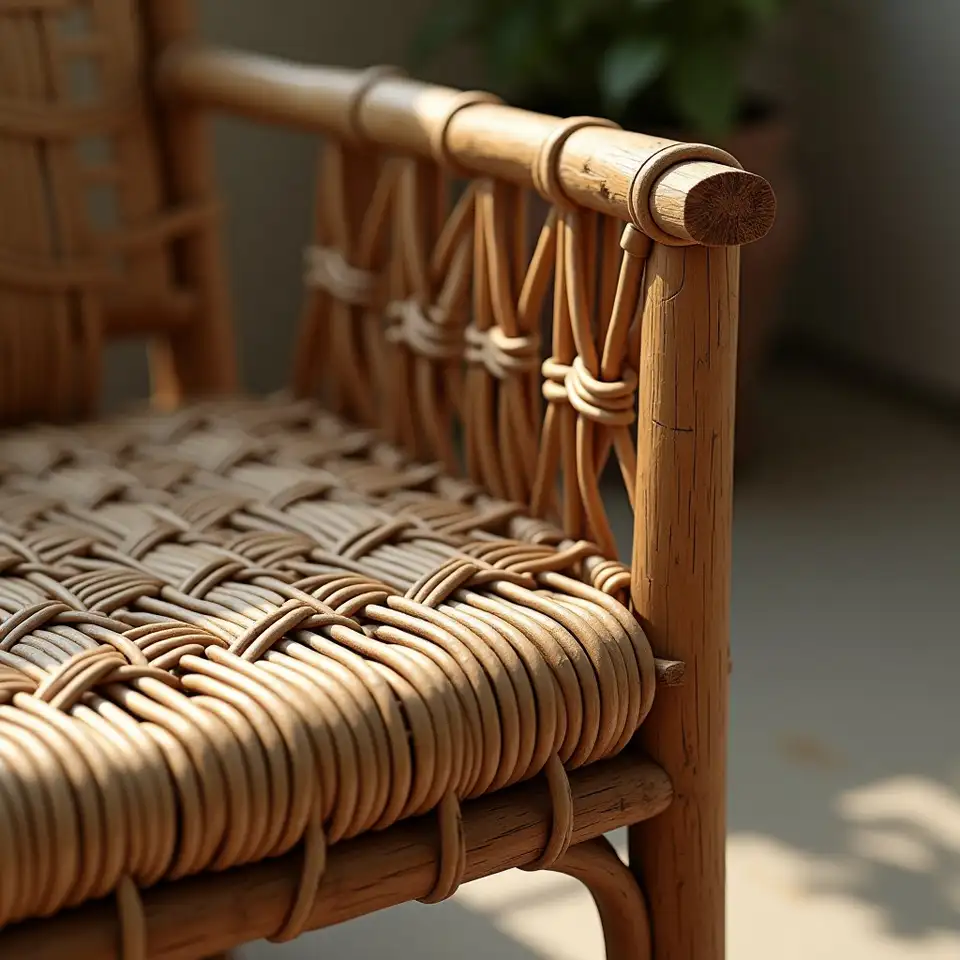
Different willow species suit different purposes. Some bend in tight curves; others resist stretching under load. The craftsperson matches variety to function, drawing on regional traditions that have shaped Australian willow craft for generations.
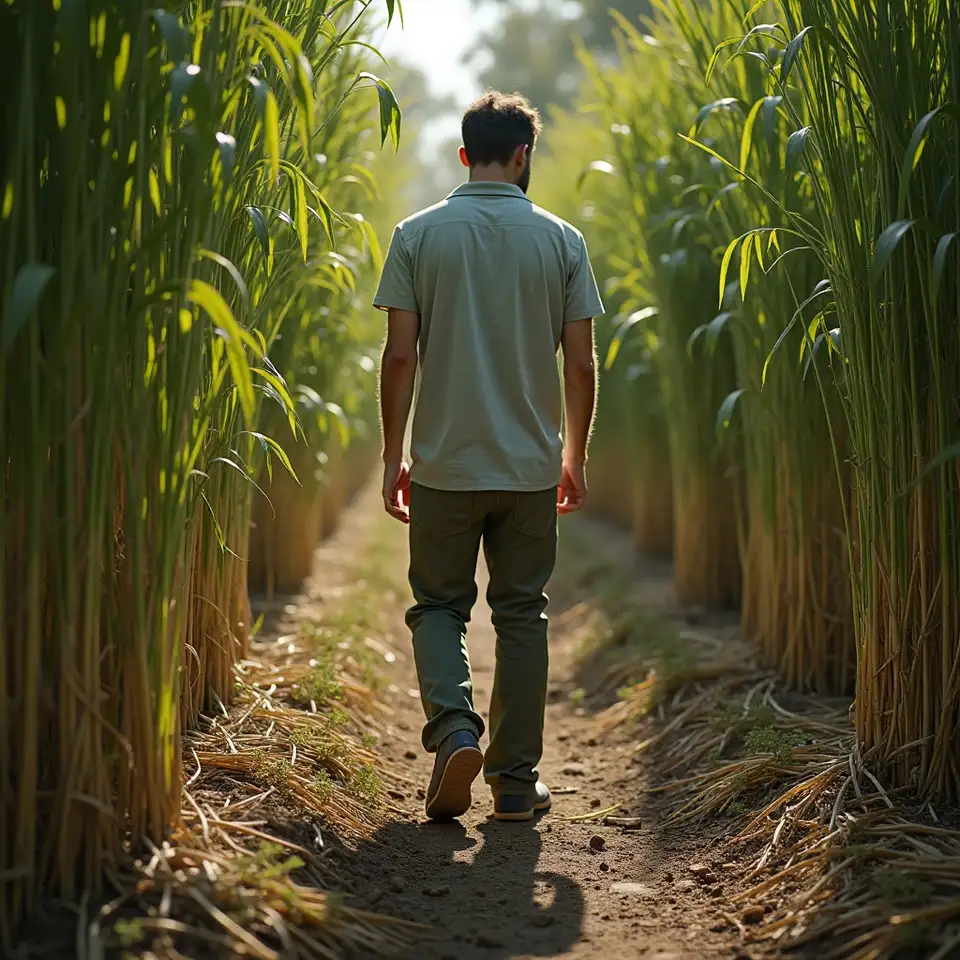
Salix alba provides long straight rods for frames. Salix purpurea offers finer weavers with purple bark that adds visual contrast. The craftsperson keeps multiple species in stock and selects based on the structural and aesthetic demands of each commission.

Cutting begins after leaf fall and continues until bud swell. Rods harvested too early contain excess moisture and rot in storage. Cut too late, the bark slips during bending and the wood becomes brittle. The window is narrow and non-negotiable.

Australian willow craft evolved from European chair-making traditions adapted to local growing conditions and available tools. The methods used in this workshop preserve the core techniques while accommodating native willow varieties and Australian climate patterns.
This website uses cookies to support core functions, analyse traffic, and improve your browsing experience. You may accept all cookies, reject non-essential ones, or read more about how data is handled.
The material decides
Willow cannot be rushed. It must be cut at the right season, stored properly, and worked while the bark still grips the wood beneath.