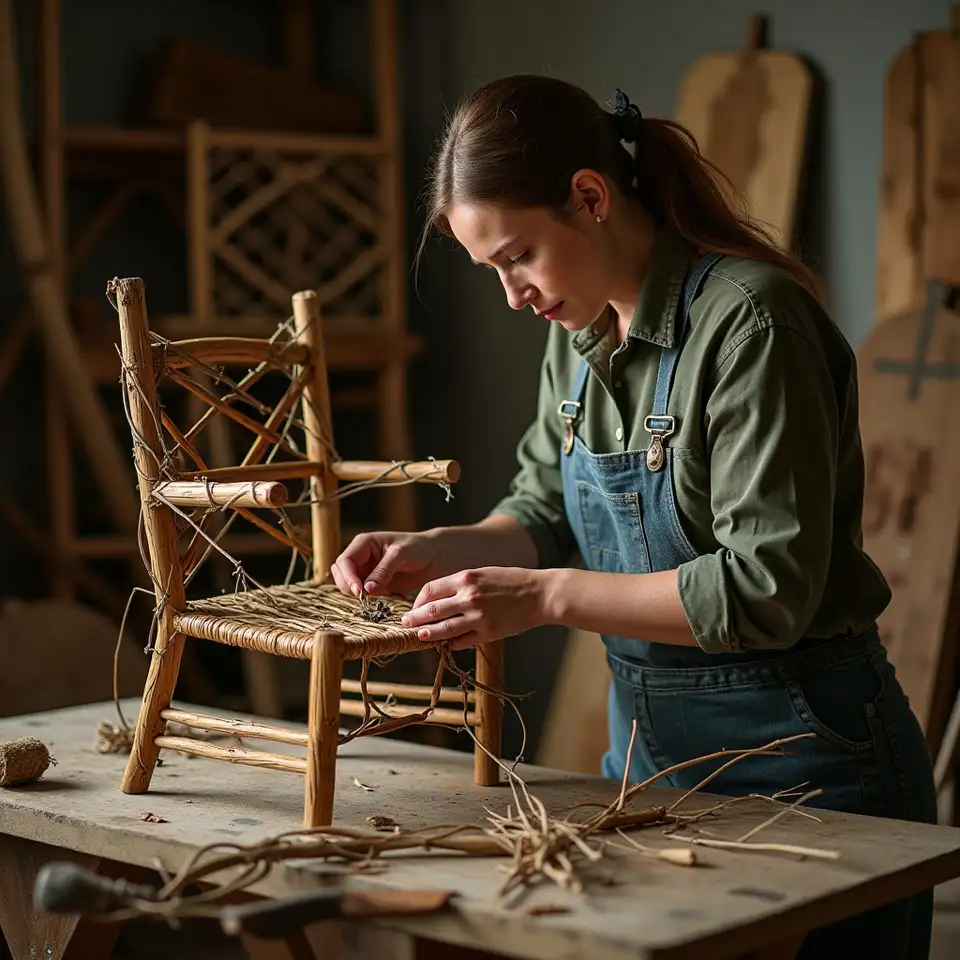
The people behind the pieces
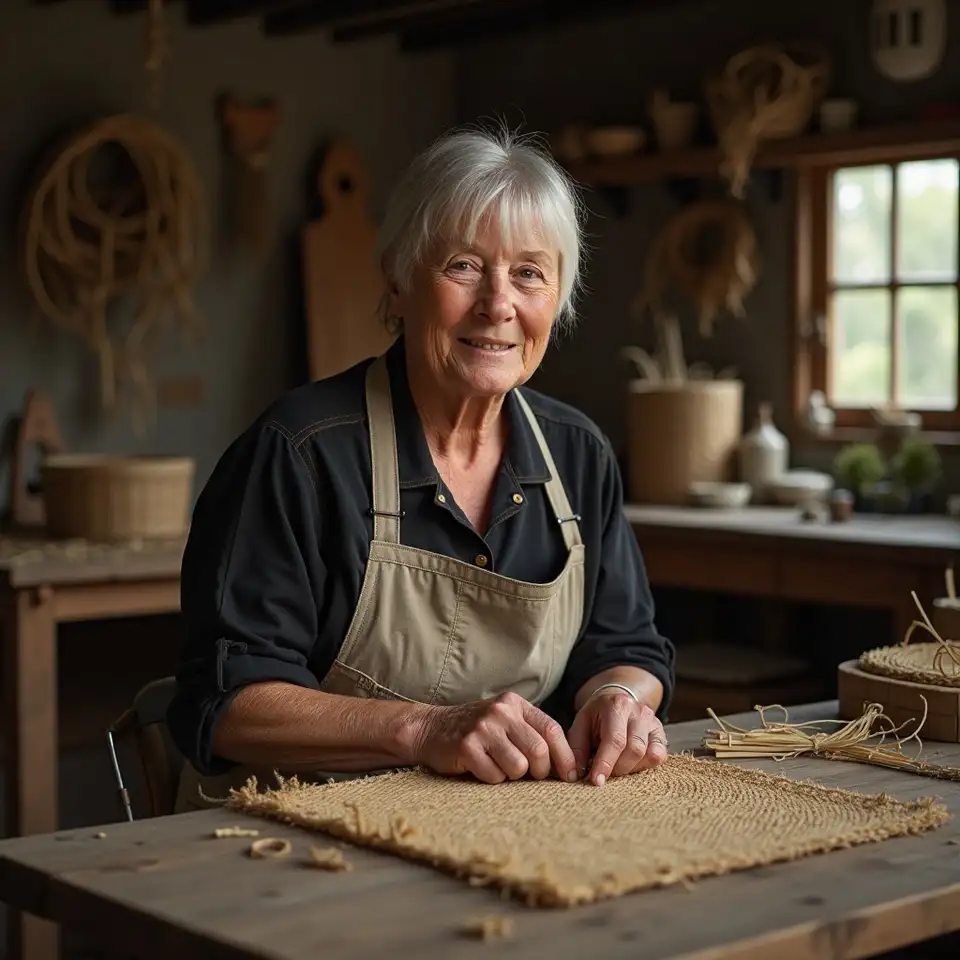
Eleanor handles every piece from raw rod to final delivery. She harvests willow during winter dormancy, manages the drying process, and weaves each seat and back by hand. Her background in horticulture informs how she reads grain and moisture content before a single bend is attempted.
Core skills

Thomas manages the business side so that workshop time remains uninterrupted. He coordinates with local growers, schedules deliveries, and maintains the drying racks and hand tools. He also documents each piece with photographs before it leaves the studio.
Core responsibilities
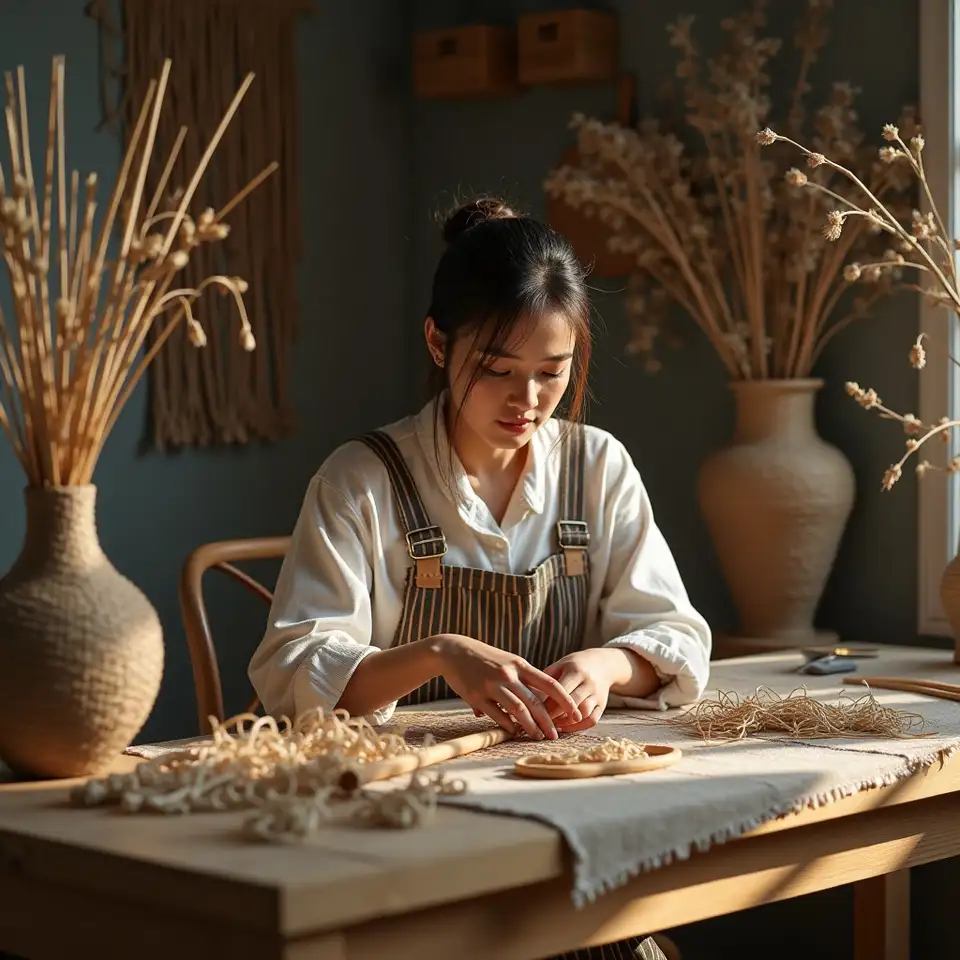
Margaret joins the workshop during peak production periods, typically autumn and spring. She specializes in the repetitive weave patterns that form chair backs and decorative screens, freeing Eleanor to focus on structural bending and joint work.
Seasonal support

Three small farms supply the workshop with consistent rod quality. The long-term relationships mean the growers understand exactly which diameter and length are needed, and they time their coppice cycles to match the workshop's production calendar.
What they provide
Follow the seasons
Willow cuts best in late winter when sap is low and bark grips tight. The workshop plans its entire year around this window, drying and storing rods so they remain supple when needed.
Waste nothing
Off-cuts become kindling, bark becomes garden mulch, and the thinnest twigs are woven into decorative panels. Every part of the harvested rod serves a purpose before it returns to the soil.
Make it repairable
Joints are lashed, not glued. If a strand breaks after years of use, it can be cut free and replaced without disassembling the whole piece. The design assumes wear and plans for it.
Leave a light footprint
No synthetic finishes, no imported hardwoods, no factory tooling. The workshop sources willow within a short radius and delivers pieces that biodegrade when their long life finally ends.
Pass it down
A well-made willow chair often outlives its maker. The goal is not to sell many, but to make each one good enough that grandchildren will still sit in it.